Morgan Griffin · 10 September 2026
Archaeological Discoveries at Novawald Ridge Reveal Ancient Harvest Techniques Echoed in Modern Celebrations
Excavation Background and Initial Findings
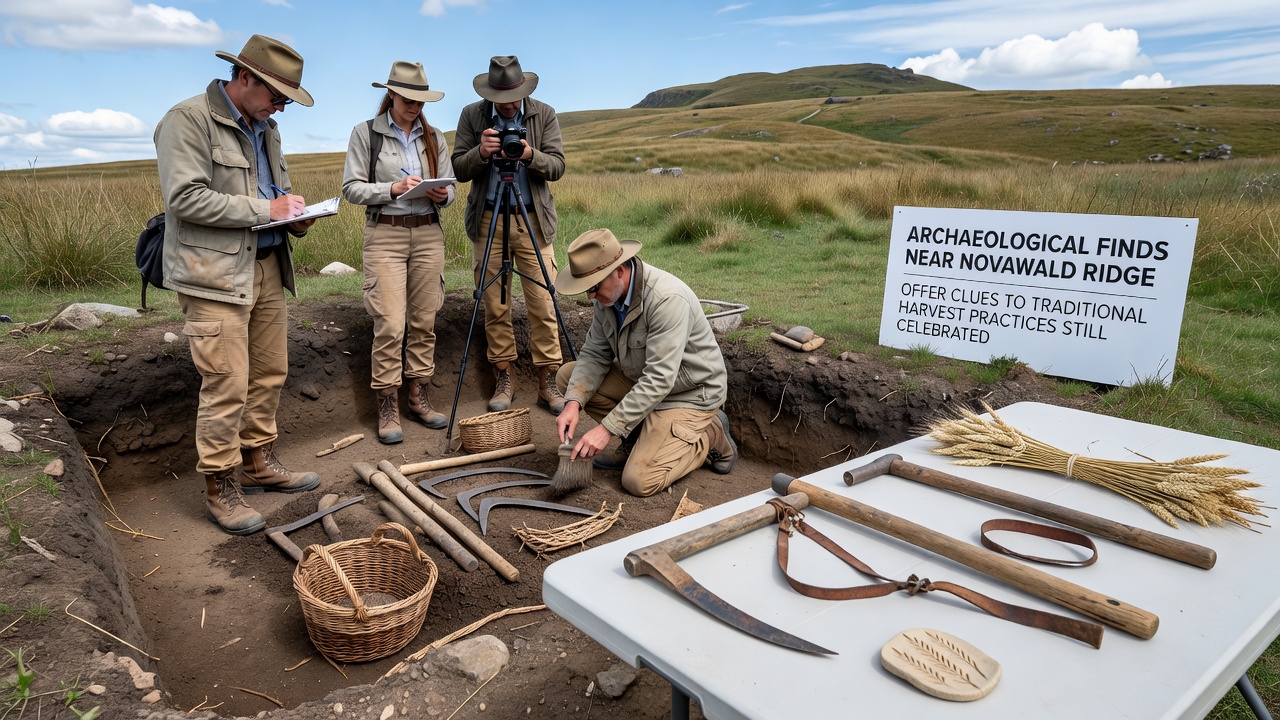
Teams from regional universities began systematic digs along Novawald Ridge in early 2025 after local reports noted unusual soil disturbances, and the work uncovered a series of storage pits lined with clay and containing preserved grain husks alongside flint sickles that show wear patterns consistent with repeated cutting of cereal crops. These artifacts date to approximately 2500 BCE based on carbon dating conducted at laboratories in Germany and cross-checked with similar European sites, while the layout of the pits suggests organized communal labor rather than individual family efforts.
Further layers revealed wooden handles and woven baskets that survived in anaerobic conditions, and researchers noted that the basket weaves match techniques still used in parts of central Europe for carrying sheaves during late summer gatherings. Soil samples from the same strata contained pollen from emmer wheat and barley, which aligns with records of early agricultural expansion in the area.
Connections to Contemporary Harvest Events
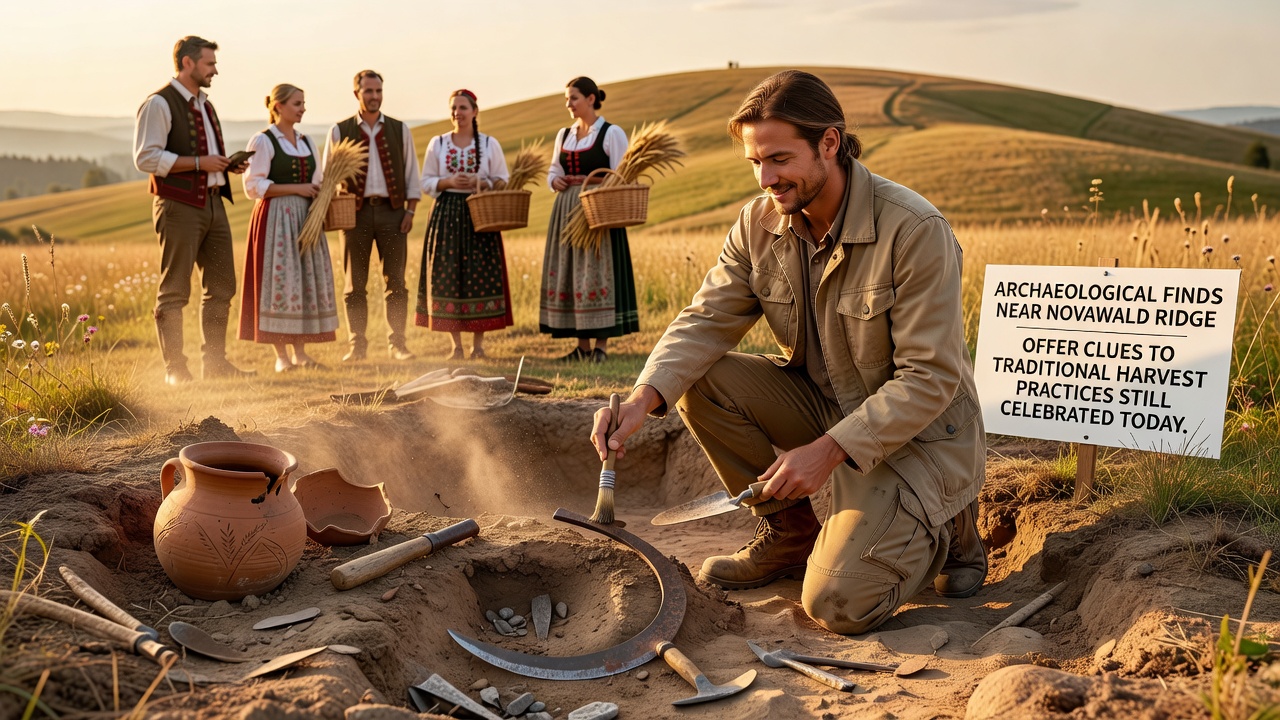
Local harvest festivals scheduled for September 2026 continue to incorporate elements that parallel the recovered tools and storage methods, including communal threshing demonstrations and displays of grain in woven containers that echo the ancient basketry. Organizers in nearby villages have referenced the archaeological reports when planning processions that carry symbolic sheaves through town centers, and participation numbers have risen as awareness of the finds spreads through regional tourism networks.
Data from visitor logs at similar heritage events in prior years shows attendance increases of up to 30 percent when new archaeological context is added to programming, according to figures compiled by the European Association for the Promotion of Cultural Heritage. The September timing coincides with peak ripeness of local grains, which matches seasonal indicators preserved in the ridge sediments.
Comparative Analysis with Other Regions
Archaeologists have drawn parallels between the Novawald Ridge assemblage and finds at sites in the Loire Valley of France, where comparable pit structures and tool marks appear in publications from the French National Institute for Preventive Archaeological Research. Both locations indicate a shift toward surplus storage that supported larger community events, and the shared use of specific flint sources suggests trade routes that extended across what is now the Rhine corridor.
Studies published by the University of British Columbia on analogous North American indigenous harvest sites highlight similar patterns of seasonal communal activity, though the tool materials differ due to local geology. These comparisons help place the Novawald evidence within broader global transitions from foraging to settled agriculture without implying direct cultural transmission.
Preservation Efforts and Future Work
Conservation teams have stabilized the exposed features using geotextile covers and drainage systems to prevent erosion ahead of the 2026 festival season, and plans call for interpretive walking paths that will allow visitors to view the pits through protective glass panels. Funding for continued excavation phases comes from a combination of state heritage grants and private contributions tied to cultural tourism initiatives.
Analysis of residue on the sickles continues at facilities in Australia through partnerships with the Australian Research Council Centre of Excellence for Australian Biodiversity and Heritage, where isotopic testing may reveal details about the diet of the original users. Preliminary results already indicate a mixed diet that included both cultivated grains and gathered wild plants.
Conclusion
The artifacts recovered near Novawald Ridge provide concrete evidence of harvest organization that persists in modified form within current September celebrations, and ongoing research continues to refine the timeline and methods employed by early communities in the region. Visitors to the 2026 events can observe direct links between the physical remains and living traditions through guided tours and hands-on demonstrations organized by local heritage groups.