Cameron Griffin · 31 August 2026
Researchers from the Novawald Forest Research Institute have announced the discovery of a rare insect in the forest's underbrush during an extensive biodiversity survey. The find occurred in a remote area with dense leaf litter and mossy terrain that has remained largely undisturbed for decades. Experts suggest the insect represents a new species with specialized adaptations to the local microclimate.
Physical Traits and Habitat Preferences
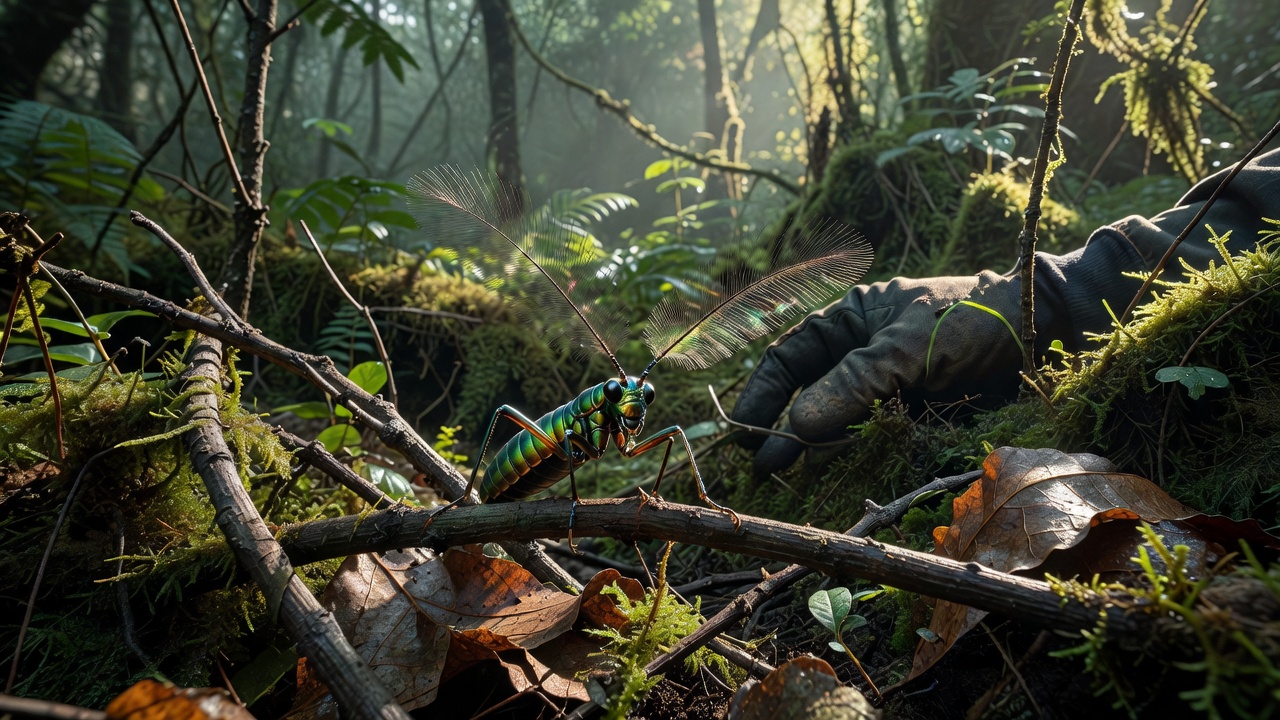
The beetle measures roughly 12 millimeters and displays iridescent blue-green wing covers along with elongated antennae suited for navigating low-light conditions. Specimens were collected from moist soil beneath native oak and beech trees where they appear to consume fungal spores and decaying plant matter. DNA sequencing is underway to establish its taxonomic position relative to known Coleoptera families. Initial field notes indicate a preference for areas with high humidity and thick organic layers that provide both food and shelter from predators. Further behavioral studies will track population density and seasonal activity patterns across multiple forest plots.
Team members emphasize that the underbrush ecosystem supports numerous undescribed invertebrates essential for nutrient cycling and soil health. Laboratory analysis of gut contents confirmed a diet focused on microfungi common only in Novawald's older growth stands.
Conservation and Research Outlook
The discovery reinforces calls for expanded protection of Novawald Forest's interior habitats amid rising external development pressures. Officials have allocated new funds for long-term monitoring programs that include pitfall traps and camera surveys targeting similar cryptic species. International partnerships are being explored to share genetic data and refine identification protocols for future finds. Community outreach efforts aim to highlight the forest's role in preserving biodiversity while encouraging responsible visitation practices that minimize soil compaction in sensitive zones. Continued surveys are expected to reveal additional rare taxa before potential climate shifts alter the underbrush environment.